



With several materials and sizes of outrigger pads available, choosing the right one for your specific job can be difficult. An outrigger pad is a load-distributing platform placed under the outrigger foot of a crane or aerial lift to spread weight and prevent equipment from sinking or shifting during operation. You need to know a lot of things about your equipment, ground conditions, and the outrigger pads you’re considering before you make a selection. Let’s look at the information you’ll need.
Common Materials for Outrigger Pads
The most common materials for outrigger pads include the following:
- Polyethylene Composite (UHMWPE or HDPE)
- Steel
- Wood
Polyethylene is used in most general construction and high-load lifting. Whether you choose UHMWPE or HDPE (or another polyethylene composite), you can expect it to be lightweight and weather resistant. You can expect to pay more for polyethylene options than you will for wood.
Steel is the go-to for extreme loads and large-scale industrial sites. This option has the highest load capacity and industrial-grade strength. For small jobs, steel isn’t the best option. It’s very heavy and requires machinery to move. Steel is also prone to rust if you keep it to use on multiple jobs.
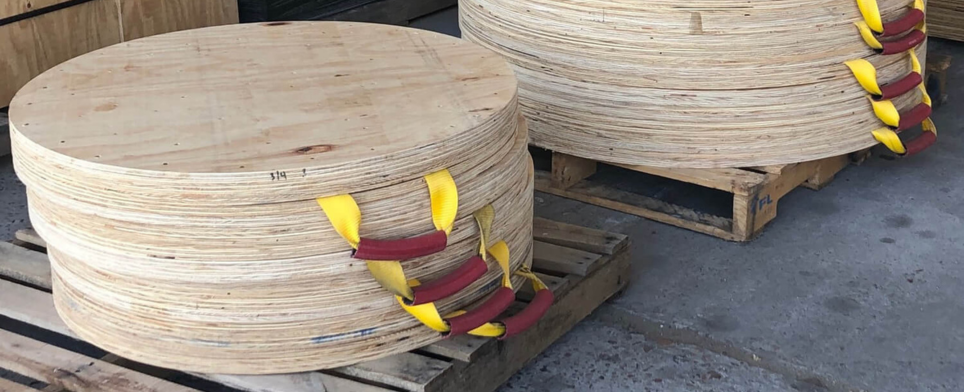
Wood outrigger pads are the most cost-effective option on the list, offering rigid support and easy replaceability across multiple job sites. They are a practical choice for crane, aerial lift, and fleet operations that need reliable ground support at scale.
How Ground Conditions Affect Your Outrigger Pad Selection
The Ground Bearing Capacity, or GBC, varies significantly by soil type. Each type of soil will have a specified pounds per square inch (PSI) that it can handle. Generally, you can expect the following:
- Soft Clay: 7–14 PSI
- Firm Soil: 14–28 PSI
- Compacted Gravel: 35+ PSI
- Concrete: Can be 100+ PSI but depends on thickness of slab
For ground types with a lower PSI, you may need thicker pads to prevent them from flexing under concentrated weight. Gulf Coast job sites in particular often involve soft clay, saturated fill, or unstable ground conditions, where proper pad sizing is especially important for safe crane and aerial lift operations.
How to Calculate the Size of Your Outrigger Pad
The pad you choose must be large enough to reduce ground-bearing pressure to a level the surface can support.
The formula for calculating the size of your outrigger pad is the Required Area equals the Maximum Outrigger Load divided by the Allowable Ground Bearing Pressure.
In some cases, you can use the common guide of choosing outrigger pads that are three times the surface area of the outrigger shoe, but you should consider applying the formula to be sure. If your outrigger pad is for crane operations, you may also multiply your final Required Area by 1.5 or 2.
Once you know the ground conditions and the size of the outrigger pad, selecting the material should be much easier. If wood outrigger pads are the right fit for your operation, Lodge Lumber manufactures them in standard and custom sizes with bulk order capabilities out of Houston, TX. Request a quote today.