



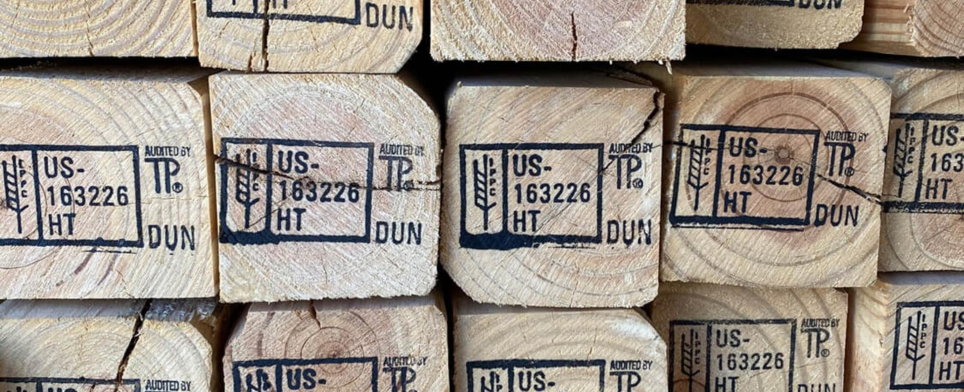
Dunnage lumber is wood used to protect cargo during shipping and storage, typically made from pine and hardwoods like oak. Standard dunnage wood comes in standard shapes and sizes, such as 2×4, 4×4, and 6×6, but you can also request custom shapes to accommodate specific loads.
The lumber used for dunnage is usually the lowest industrial grade or Grade #4, and may have knots and other aesthetic imperfections. Because dunnage lumber is placed inside shipping containers to fill empty spaces and brace cargo for ocean, train, or truck voyage, the appearance of the wood is rarely a concern. What matters is density and durability.
Dunnage Lumber Uses in Industrial Shipping
There are four key reasons you may need dunnage wood for industrial shipping. These are:
- Cargo bracing
- Dunnage wood pieces are placed on and nailed to the floor of the shipping container to fill empty spaces and prevent cargo from shifting, sliding, or falling.
- Load lifting
- Dunnage lumber is placed between the cargo, the floor, or heavy machinery to protect the item as items are lifted from the ground into the container.
- Item separation
- Dunnage creates separation between stacks of cargo, such as pipe or steel, to prevent items from shifting into each other and causing damage. It can also be used to create a lifting void for forklifts or lifting straps.
- Moisture protection
- Dunnage lumber lifts cargo off the floor of the container or yard to protect items within from water damage.
Related Terms for Dunnage Lumber
Industrial buyers sourcing dunnage lumber may encounter related terms used interchangeably in the shipping and logistics industry. These could include:
- Blocking and bracing
- Wooden pieces placed within a trailer or shipping container to fill empty space and prevent cargo from sliding or tilting during transport
- Timber supports
- Structural wood pieces used to hold cargo in a fixed position and prevent movement or damage during transit.
- Packing and crating
- Wood materials used to construct crates and frames that protect and support freight within a trailer or container.
Why Industrial Shippers Choose Dunnage Lumber
Dunnage wood must be heat-treated to comply with national and international pest regulations. Otherwise, dunnage wood is unfinished. This means it’s denser and more durable, so that it can withstand the impacts and compression from heavy loads in transit.
With the right packing and crating wood, cargo bracing, and support for moisture protection, cargo is safe to ship by ocean freight, rail, and road. It’s essential for industrial shipping.
Lodge Lumber supplies dunnage lumber in standard and custom sizes for industrial shipping operations. Contact us today to discuss your requirements and get an order started.